

Sticks and Balls: The Marshall Islands' First International Match
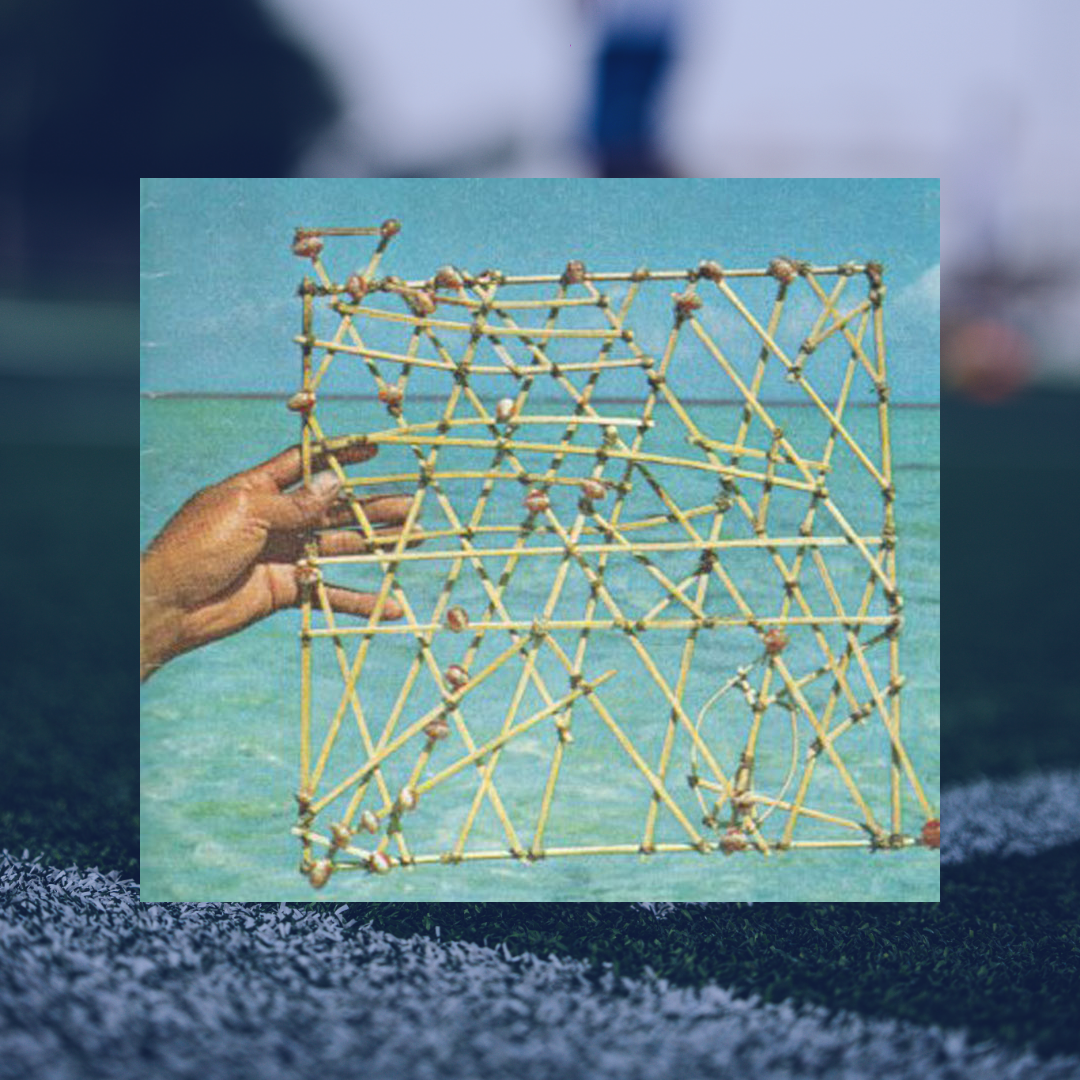
There is an old Marshallese tool for finding your way across open ocean. It's called a stick chart, a lattice of lashed coconut midrib, shaped to mirror the pattern of swells as they bend and break around islands too far apart to see one from the other. No instruments, no satellite. A navigator would lie in the bottom of a canoe, feel the water move beneath the hull, and know exactly where land was, even land they couldn't see yet. The chart didn't map the islands themselves. It mapped the space between them.
When the Marshall Islands captain led his team out for their first ever international football match, he walked out holding one.
Built from nothing
The Marshall Islands Soccer Federation was founded in 2020 because one man's son wanted to play and there was nowhere for him to do it. No domestic league, no regulation pitch in the entire country, no real soccer history at all — basketball, baseball, and volleyball had always been the islands' games, a legacy of decades of close ties to the United States. Founder Shem Livai started the federation with nothing but the conviction that it shouldn't stay that way.
For a long time, "nothing" was an accurate description. No balls. No bibs, cones, or goals. A technical director who took the job before he'd ever set foot in the country, building a soccer programme over video calls with a president he hadn't met in person. The early work was about as basic as it gets: getting equipment onto islands where equipment simply didn't exist, and standing in an open field hoping someone would show up.
People did show up. And slowly, an entire footballing project grew out of a series of small, stubborn decisions made by volunteers with day jobs they kept abandoning because this mattered more.
A team assembled by word of mouth
There was no scouting network behind this roster. There didn't need to be — there's barely a Marshallese person on Earth who doesn't know someone connected to the team. Word moved through cousins, coaches, a tweet that landed in the right inbox. One player found out he'd made the squad not through an email like his teammates, but by a flight ticket showing up out of nowhere. Another, a teenage centre-back who plays with the ferocity his nickname promises, had only been playing organised soccer for two years before stepping out as a starter for his country.
The team itself is a patchwork that mirrors the nation it represents: native Marshallese players who learned the game on basketball courts and stretches of sand, players born in neighbouring Pacific nations who grew up with football already in their blood, and a sizeable contingent of American-born Marshallese from Arkansas, some of whom had never set foot on the islands their family came from. Almost nobody had met before camp started. Several had never played a full 11-a-side match in their lives.
Why Arkansas
Northwest Arkansas is home to the largest population of Marshallese people outside the islands themselves — more than fifteen thousand, a community that traces back to a single man named John Moody, who found work at a chicken processing plant decades ago and sent word home that there were jobs to be had. Others followed. Over forty years, a corner of the American Midwest became something the community itself jokingly calls an atoll of its own.
It made sense, then, that this is where the team's first camp and first matches were held — close enough to a sizeable Marshallese population to fill the stands, but still a strange landing point for players arriving straight from the Pacific. Some had never seen so many trees. Several had never been anywhere that wasn't within sight of the ocean.
The walkout
Game day arrived with all the nerves you'd expect from a country fielding its first team. The opposition, the US Virgin Islands, had decades of footballing infrastructure and FIFA-recognised status behind them. The Marshall Islands had a squad that had been together for less than a week.
The captain led his team out holding a stick chart. It was a small, deliberate gesture, but it carried weight: a roster pulled together from atolls and continents, players who'd never met, now walking out as one. The same logic that once guided a canoe between islands too distant to see was, in its own way, guiding a team that had been scattered the same way.
The match did not start well. An early header dropped just out of the keeper's reach, and for a few minutes the worst fears crept in — that the gap in experience would simply be too much, that the scoreline would tell an unkind story to a watching world. But the team didn't fold. They found their footing, started creating chances of their own, and by the time the final whistle blew on a result that didn't go their way, nobody in the stadium was thinking about the scoreline. They were thinking about what they'd just watched: a country playing its first game of international football, and clearly meaning to play many more.
What PARK contributed
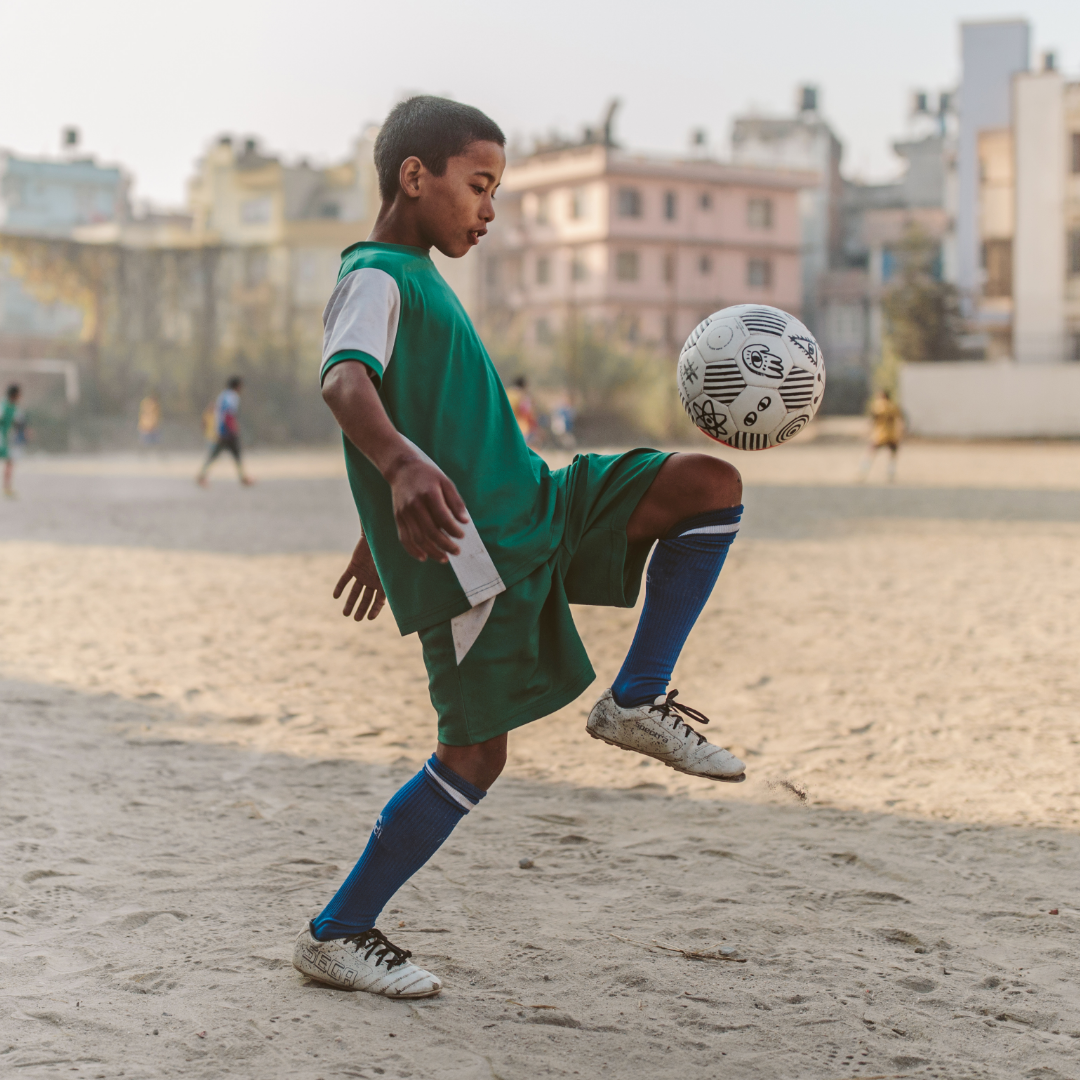
PARK supplied the match balls for the tournament. It's a small detail next to everything else that had to come together to get this team onto a pitch, but it mattered to us. We also sent a separate set of balls back to the islands, so the kids in Majuro who'll make up the next generation of this team already have something with our name on it to kick around.
This is the part of football we want to be part of: not the polished, fully resourced end of the sport, but the end where a federation is two years old, a national team is five days old, and somebody still has to supply the ball.
Drops together make the ocean
There's a Marshallese proverb the team has carried with them since this all began: drops together make the ocean, and grains of sand together make an island. It's a fitting description of how this team came to exist — not through infrastructure or investment, but through a long accumulation of small, separate decisions to show up. A federation founded because one kid wanted to play. Volunteers who kept choosing this over stable jobs. Players who got on a plane without really knowing what they were walking into. A captain who walked onto the pitch holding a chart built for finding your way across open water, because that's exactly what this team has had to do.
They're still finding it. The federation's stated ambition is FIFA membership and a place at the table with the rest of the footballing world. Whatever comes next, this team has already done the hardest part: it found a way to exist at all.


Leave a comment
This site is protected by hCaptcha and the hCaptcha Privacy Policy and Terms of Service apply.